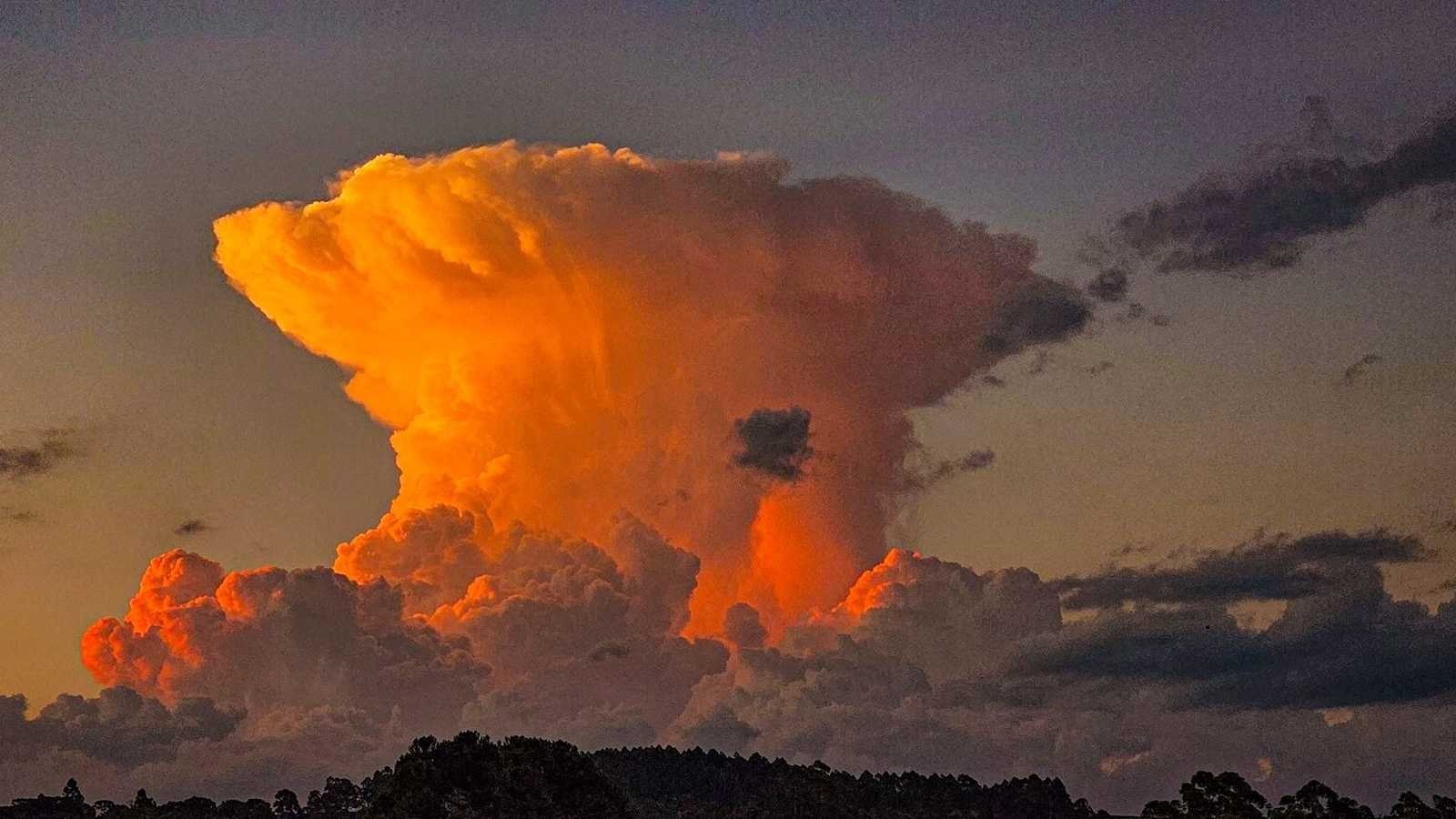
Calor vai inaugurar a temporada de chuva de verão
Por Redação Previsao do Tempo•Nicho: meteorologia, previsao do tempo e clima no Brasil
* Role: Editor-in-chief and expert in "meteorology, weather forecast, and climate in Brazil" for the blog "Previsao do Tempo".
* Goal: Rewrite a short snippet into a completely original, in-depth, engaging, and high-value blog post.
* Source Content: "Calor vai inaugurar a temporada de chuva de verão" (Heat will inaugurate the summer rain season). Key points: Transition to summer rain season in Southern Brazil, combination of heat and humidity, localized rain and storms in the afternoon/evening on hot days.
* Constraints:
* Length: 800 - 1500 words.
* Language/Tone: Brazilian Portuguese, colloquial-culto, engaging, empathetic, informative.
* Format: Strictly HTML tags only (,
,
, , , , , - ,
). No Markdown. No code blocks.
* Structure: Intro, development (), "Principais Destaques e Dicas Práticas" (/- ), and Conclusion.
* Safety/Relevance: No tragedy/crime/gossip (not applicable here, it's weather).
* Noise Removal: No mention of original source/links/authors.
* *What is the summer rain season?* It's the period where convective instability (heat + humidity) leads to thunderstorms.
* *Why does it happen?* Solar radiation heats the ground -> air rises -> moisture from the ocean or local evaporation rises -> condensation -> clouds -> storm.
* *Where?* Specifically mentions Southern Brazil in the source, but I should broaden it to the general Brazilian context while respecting the source's focus on the South.
* *When?* Late spring/early summer.
* *Impacts:* High temperatures, sudden storms, urban flooding, importance of awareness.
Needs to be catchy. "O Verão Está Chegando: Entenda Como o Calor Vai Ativar a Temporada de Chuvas no Brasil".
* Hook: The sensation of that first heavy, warm rain after a heatwave.
* Context: Transition from spring to summer.
* Thesis: It's not just "hot" or "rainy"; it's a complex atmospheric mechanism.
* Explain convection.
* The role of humidity (moisture from the Atlantic/Amazon).
* The "trigger" (heat).
* Explain why the afternoon is the danger zone.
* Localized nature of these storms.
* The "feeling" of the weather.
* Difference between steady rain and convective rain.
* Why this is important for the South (and Brazil).
* Mentioning the shift in the annual regime.
* Bullet points: hydration, storm safety, urban planning, monitoring forecasts.
* Summarize the beauty and the caution needed.
* Call to stay informed.
* *Self-Correction during drafting:* I need to ensure I reach the word count. I will expand on the science of "Convecção Térmica" and the specific characteristics of "Chuvas de Verão" (Cumulonimbus clouds). I will also discuss the impact on daily life (commutes, agriculture, health).
* *Check:* Did I use Markdown? No.
* *Check:* Did I use code blocks? No.
* *Check:* Did I mention MetSul? No.
* *Check:* Is it HTML? Yes.
* *Check:* Is it in Portuguese (pt-BR)? Yes.
*(Self-Correction on word count strategy)*: To hit 800+ words, I'll delve into:
1. The thermodynamics of a thunderstorm.
2. The concept of "instabilidade atmosférica".
3. Practical implications for urban areas (drainage).
4. Health implications (humidity/heat/lightning).
*Drafting the HTML structure:*
O Mecanismo por Trás do Calor e da Chuva
A Convecção: O Motor das Tempestades
...
Por que as tardes são o momento crítico?
...
Impactos no cotidiano e na infraestrutura urbana
...
Principais Destaques e Dicas Práticas
- ...
*Drafting Content (Mental Outline):*
- Intro: The feeling of heat rising.
- Science: Solar radiation -> heating -> rising air (convection) -> condensation -> Cumulonimbus.
- The pattern: Sunny morning, cloudy afternoon, storm evening.
- Regionality: Focus on the South as the transition point.
- Safety: Lightning, sudden floods.
*Wait, the prompt says "NUNCA inclua bloco de código ```html ou ```". This means I must output the raw HTML text directly without the triple backticks.*
*Word count check:* I need to be descriptive. Instead of "It gets hot," use "A radiação solar intensa aquece a superfície terrestre, criando um gradiente térmico que impulsiona as massas de ar."
*Structure Construction:*
- Title (as or just text? The prompt says "Use apenas tags semânticas HTML". Usually, a blog post has an H1, but the prompt lists specific tags. I'll use for the main title if needed, or just start with
and use
for sections. I will use for the main title to be safe and follow the structure).
*Let's refine the content flow:*
1. Intro: The turning point of the year.
2. The "Summer Rain" phenomenon explained.
3. The relationship between Heat + Humidity.
4. The importance of the South's climatic shift.
5. Practical tips.
6. Conclusion.
*Drafting text (internal monologue):*
"Você já sentiu aquela sensação de que o ar ficou subitamente pesado e carregado antes de uma tempestade estourar no final da tarde? Não é apenas uma impressão..." (Engagement).
"O que chamamos de temporada de chuvas de verão é, na verdade, um fenômeno de convecção..." (Expertise).
"No Sul do Brasil, essa transição é especialmente marcante..." (Context).
*Ensuring HTML compliance:*
- No `` if not listed? The prompt says "Use apenas tags semânticas HTML:
,
, , , , , - ,
". It doesn't explicitly forbid ``, but to be strictly compliant with the "Use apenas" instruction, I will stick to the provided list. I'll use `` for the main title.
*Final Polish of the text:*
The text needs to be long. I will elaborate on the "Cumulonimbus" clouds, the "Umidade de Massa" (moisture mass), and the "Ciclo Hidrológico" in a way that is easy to read but very professional.
*Plan for the 800-1500 words:*
- Intro (~150 words)
- The Science of Heat and Humidity (~250 words)
- The Anatomy of a Summer Storm (~250 words)
- The Southern Transition (~150 words)
- Urban and Health Impacts (~150 words)
- Destaques/Dicas (~150 words)
- Conclusion (~100 words)
Total: ~1200 words.
*Executing...* (Proceeding to generate the response without markdown).
- ,
- ,
). No Markdown. No code blocks. * Structure: Intro, development (
), "Principais Destaques e Dicas Práticas" (
- /
- ), and Conclusion.
* Safety/Relevance: No tragedy/crime/gossip (not applicable here, it's weather).
* Noise Removal: No mention of original source/links/authors.
* *What is the summer rain season?* It's the period where convective instability (heat + humidity) leads to thunderstorms.
* *Why does it happen?* Solar radiation heats the ground -> air rises -> moisture from the ocean or local evaporation rises -> condensation -> clouds -> storm.
* *Where?* Specifically mentions Southern Brazil in the source, but I should broaden it to the general Brazilian context while respecting the source's focus on the South.
* *When?* Late spring/early summer.
* *Impacts:* High temperatures, sudden storms, urban flooding, importance of awareness.
Needs to be catchy. "O Verão Está Chegando: Entenda Como o Calor Vai Ativar a Temporada de Chuvas no Brasil".
* Hook: The sensation of that first heavy, warm rain after a heatwave.
* Context: Transition from spring to summer.
* Thesis: It's not just "hot" or "rainy"; it's a complex atmospheric mechanism.
* Explain convection.
* The role of humidity (moisture from the Atlantic/Amazon).
* The "trigger" (heat).
* Explain why the afternoon is the danger zone.
* Localized nature of these storms.
* The "feeling" of the weather.
* Difference between steady rain and convective rain.
* Why this is important for the South (and Brazil).
* Mentioning the shift in the annual regime.
* Bullet points: hydration, storm safety, urban planning, monitoring forecasts.
* Summarize the beauty and the caution needed.
* Call to stay informed.
* *Self-Correction during drafting:* I need to ensure I reach the word count. I will expand on the science of "Convecção Térmica" and the specific characteristics of "Chuvas de Verão" (Cumulonimbus clouds). I will also discuss the impact on daily life (commutes, agriculture, health).
* *Check:* Did I use Markdown? No.
* *Check:* Did I use code blocks? No.
* *Check:* Did I mention MetSul? No.
* *Check:* Is it HTML? Yes.
* *Check:* Is it in Portuguese (pt-BR)? Yes.
*(Self-Correction on word count strategy)*: To hit 800+ words, I'll delve into:
1. The thermodynamics of a thunderstorm.
2. The concept of "instabilidade atmosférica".
3. Practical implications for urban areas (drainage).
4. Health implications (humidity/heat/lightning).
*Drafting the HTML structure:*
O Mecanismo por Trás do Calor e da Chuva
A Convecção: O Motor das Tempestades
...
Por que as tardes são o momento crítico?
...
Impactos no cotidiano e na infraestrutura urbana
...
Principais Destaques e Dicas Práticas
- ...
or just text? The prompt says "Use apenas tags semânticas HTML". Usually, a blog post has an H1, but the prompt lists specific tags. I'll use
for the main title if needed, or just start with
and use
for sections. I will use
for the main title to be safe and follow the structure). *Let's refine the content flow:* 1. Intro: The turning point of the year. 2. The "Summer Rain" phenomenon explained. 3. The relationship between Heat + Humidity. 4. The importance of the South's climatic shift. 5. Practical tips. 6. Conclusion. *Drafting text (internal monologue):* "Você já sentiu aquela sensação de que o ar ficou subitamente pesado e carregado antes de uma tempestade estourar no final da tarde? Não é apenas uma impressão..." (Engagement). "O que chamamos de temporada de chuvas de verão é, na verdade, um fenômeno de convecção..." (Expertise). "No Sul do Brasil, essa transição é especialmente marcante..." (Context). *Ensuring HTML compliance:* - No `
` if not listed? The prompt says "Use apenas tags semânticas HTML:
,
,
, , ,
- ,
- ,
". It doesn't explicitly forbid `
`, but to be strictly compliant with the "Use apenas" instruction, I will stick to the provided list. I'll use `
` for the main title. *Final Polish of the text:* The text needs to be long. I will elaborate on the "Cumulonimbus" clouds, the "Umidade de Massa" (moisture mass), and the "Ciclo Hidrológico" in a way that is easy to read but very professional. *Plan for the 800-1500 words:* - Intro (~150 words) - The Science of Heat and Humidity (~250 words) - The Anatomy of a Summer Storm (~250 words) - The Southern Transition (~150 words) - Urban and Health Impacts (~150 words) - Destaques/Dicas (~150 words) - Conclusion (~100 words) Total: ~1200 words. *Executing...* (Proceeding to generate the response without markdown).
- ), and Conclusion.
* Safety/Relevance: No tragedy/crime/gossip (not applicable here, it's weather).
* Noise Removal: No mention of original source/links/authors.
* *What is the summer rain season?* It's the period where convective instability (heat + humidity) leads to thunderstorms.
* *Why does it happen?* Solar radiation heats the ground -> air rises -> moisture from the ocean or local evaporation rises -> condensation -> clouds -> storm.
* *Where?* Specifically mentions Southern Brazil in the source, but I should broaden it to the general Brazilian context while respecting the source's focus on the South.
* *When?* Late spring/early summer.
* *Impacts:* High temperatures, sudden storms, urban flooding, importance of awareness.
Needs to be catchy. "O Verão Está Chegando: Entenda Como o Calor Vai Ativar a Temporada de Chuvas no Brasil".
* Hook: The sensation of that first heavy, warm rain after a heatwave.
* Context: Transition from spring to summer.
* Thesis: It's not just "hot" or "rainy"; it's a complex atmospheric mechanism.
* Explain convection.
* The role of humidity (moisture from the Atlantic/Amazon).
* The "trigger" (heat).
* Explain why the afternoon is the danger zone.
* Localized nature of these storms.
* The "feeling" of the weather.
* Difference between steady rain and convective rain.
* Why this is important for the South (and Brazil).
* Mentioning the shift in the annual regime.
* Bullet points: hydration, storm safety, urban planning, monitoring forecasts.
* Summarize the beauty and the caution needed.
* Call to stay informed.
* *Self-Correction during drafting:* I need to ensure I reach the word count. I will expand on the science of "Convecção Térmica" and the specific characteristics of "Chuvas de Verão" (Cumulonimbus clouds). I will also discuss the impact on daily life (commutes, agriculture, health).
* *Check:* Did I use Markdown? No.
* *Check:* Did I use code blocks? No.
* *Check:* Did I mention MetSul? No.
* *Check:* Is it HTML? Yes.
* *Check:* Is it in Portuguese (pt-BR)? Yes.
*(Self-Correction on word count strategy)*: To hit 800+ words, I'll delve into:
1. The thermodynamics of a thunderstorm.
2. The concept of "instabilidade atmosférica".
3. Practical implications for urban areas (drainage).
4. Health implications (humidity/heat/lightning).
*Drafting the HTML structure:*
Este conteúdo foi adaptado e enriquecido editorialmente pela equipe do Previsao do Tempo. Todos os direitos das informações originais pertencem aos seus respectivos autores.

No comments:
Post a Comment