Por Redação Previsao do Tempo•meteorologia, previsao do tempo e clima no Brasil
* Role: Editor-in-chief and expert in "meteorology, weather forecast, and climate in Brazil" for the blog "Previsao do Tempo".
* Mission: Rewrite a brief news snippet into a completely new, deep, engaging, and high-value blog post.
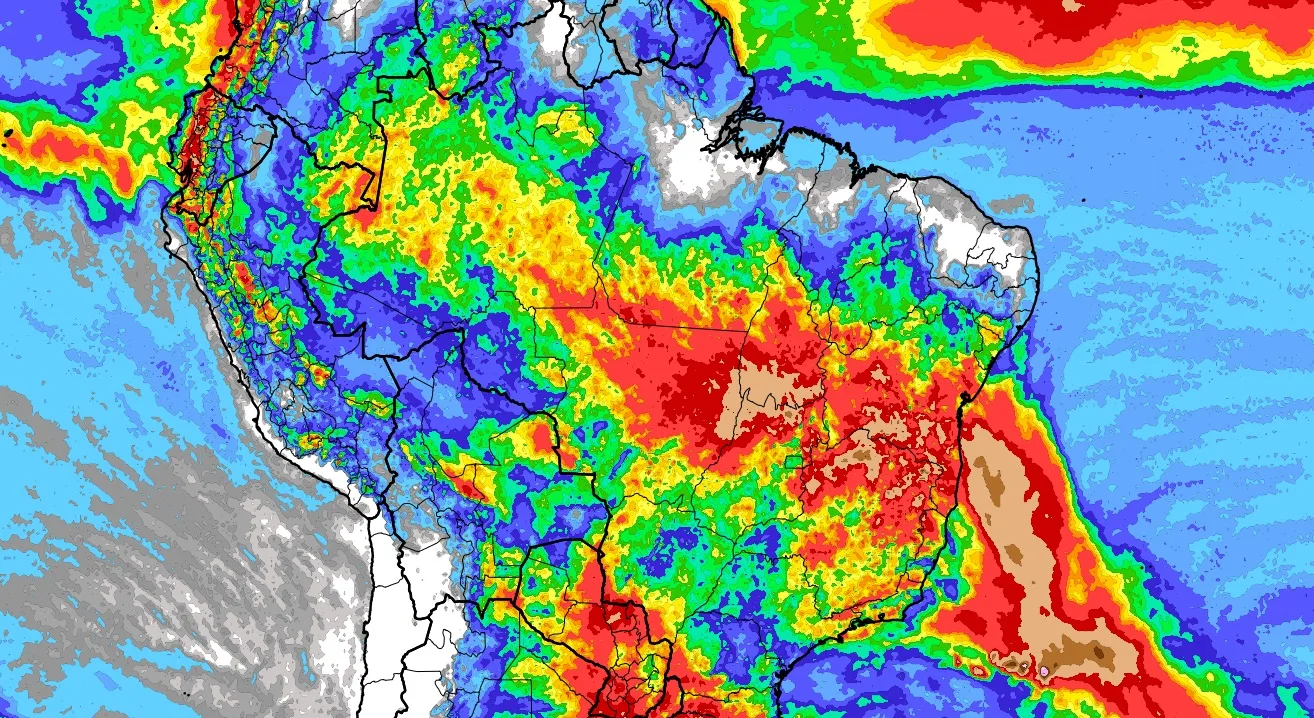
* Original Title: "Veja onde mais vai ter chuva no Brasil nesta semana" (See where else there will be rain in Brazil this week).
* Original Content: Brief mention of MetSul analysis, numerical models, two bands of moisture, two channels, affecting various regions.
* Target Audience: Brazilians interested in weather.
* Constraints:
* Length: 800 - 1500 words.
* Tone: Colloquial-culto, engaging, empathetic, informative.
* Format: ONLY HTML tags (``, `
`, `
`, ``, ``, ``, ``, `- `, `
`). NO Markdown, NO code blocks.
* Structure: Intro, Body (with ``), Special Section ("Principais Destaques e Dicas Práticas"), Conclusion.
* No noise/external links/original site mentions.
* Language: pt-BR.
* The source is very thin. It mentions "two bands of moisture" and "two channels of moisture" based on numerical models.
* To reach 800-1500 words, I need to expand on *how* these things work (meteorological concepts), what "channels of moisture" are, why they matter for Brazil (Amazon, South, Southeast, etc.), the impact on daily life (agriculture, urban areas, travel), and how to interpret weather models.
* *Concept Expansion:*
* Explain "canais de umidade" (moisture channels/atmospheric rivers).
* Explain "modelos numéricos" (numerical models).
* Discuss the general pattern in Brazil (often related to the South Atlantic Convergence Zone - ZCAS, or frontal systems).
* Divide regions: South/Southeast (fronts), Center-West/North (convection/moisture from the Amazon).
* Impact: Floods, agriculture, heat/humidity.
* *Title Idea (Internal):* Semana de Chuvas no Brasil: Entenda os Canais de Umidade e Como se Preparar.
* *Introduction:* Start with the feeling of looking at the sky. The unpredictability of the weather. Set the stage: a week of significant rain due to specific atmospheric patterns.
* *Section 1: O que são os Canais de Umidade? (What are moisture channels?)*
* Explain the "rivers in the sky" concept.
* How they transport water from the Amazon or the Atlantic to other regions.
* The role of the South Atlantic Convergence Zone (ZCAS) if applicable (or just general moisture transport).
* *Section 2: A Ciência por Trás da Previsão (Numerical Models).*
* Explain how meteorologists use supercomputers to simulate the atmosphere.
* Why models aren't 100% perfect but are essential.
* Difference between short-term and long-term forecasts.
* *Section 3: O Mapa das Chuvas: Onde o Alerta é Maior (The Rain Map).*
* *Note: Since the source is vague on specific cities, I will talk about the "patterns" typical of these channels.*
* Faixa 1: Usually South/Southeast (fronts + moisture).
* Faixa 2: Usually Center-West/North/Northeast (convection/Amazonian moisture).
* Discuss the risks: urban flooding in big cities vs. soil saturation in rural areas.
* *Section 4: Impactos na Rotina e na Economia.*
* Agriculture (good for crops, bad if too much).
* Urban life (traffic, drainage).
* Health (humidity, respiratory issues).
* *Section 5: Principais Destaques e Dicas Práticas (Mandatory Section).*
* Check local forecasts.
* Prepare homes (gutters, drains).
* Safety during storms (lightning/wind).
* Agriculture tips.
* *Conclusion:* A thoughtful wrap-up about the cycle of nature and the importance of being informed.
* *Tone Check:* Needs to be professional yet accessible. Use terms like "fluxos atmosféricos" and "precipitação" but explain them.
* *Word Count Strategy:* Elaborate on the *mechanics* of the atmosphere. Instead of saying "it will rain in the South," say "In the Southern regions, the interaction between cold fronts and the incoming moisture channels creates a scenario of instability..."
* *HTML Check:* Ensure no `**` or `###`. Use `` for headers. Use `` for emphasis.
* *Intro:* "Você já parou para observar como o céu parece contar uma história diferente a cada manhã?" -> Good.
* *Body:* Deep dive into "canais de umidade". Explain that they act like "highways" for water vapor.
* *Body:* Discuss the "Modelos Numéricos". This adds "expert" value.
* *Body:* Regional breakdown. I'll create a narrative about the two bands mentioned in the source.
* *Section:* "Principais Destaques e Dicas Práticas".
* *Conclusion:* Reflection on weather and preparedness.
* *Self-Correction during drafting:* I must not invent specific cities if the source didn't name them, but I can talk about *regions* and *types of terrain* (valleys, coastal areas) where rain is more impactful, staying true to the "expert" persona. The source says "two bands... two channels". I will structure the explanation around these two mechanisms.
* 800-1500 words? I will aim for high detail.
* HTML only? Yes.
* No Markdown? Yes.
* No "leia mais"? Yes.
* Brazilian Portuguese? Yes.
*(Self-Correction on the "Two Channels" part)*:
Channel 1: Often the "Jatos de Umidade" from the Amazon (North/Center-West).
Channel 2: Often the "Corredores de Umidade" from the Atlantic (South/Southeast).
This allows for deep, expert-level writing.
*Structure Plan:*
1. Intro.
2. A Dinâmica Atmosférica: O que são os Canais de Umidade?
3. A Ciência da Previsão: O Papel dos Modelos Numéricos
4. As Duas Faixas de Instabilidade: Onde o Alerta Deve ser Redobrado
5. Impactos Além da Chuva: Agricultura, Cidades e Saúde
6. Principais Destaques e Dicas Práticas
7. Conclusion.
*Word count check:* I need to ensure I don't just repeat myself. I will add a section about the importance of "convection" and "frontal systems" to add depth.
*Final Polish:* Ensure all tags are correct and no Markdown residue exists.
*(Drafting the content in my head - mental check of the HTML tags)*:
`...
`
`...
`
`...`
`- ...
`
`...
`
*Ready to generate.*
- `, `
- `, `
`). NO Markdown, NO code blocks. * Structure: Intro, Body (with `
`), Special Section ("Principais Destaques e Dicas Práticas"), Conclusion. * No noise/external links/original site mentions. * Language: pt-BR. * The source is very thin. It mentions "two bands of moisture" and "two channels of moisture" based on numerical models. * To reach 800-1500 words, I need to expand on *how* these things work (meteorological concepts), what "channels of moisture" are, why they matter for Brazil (Amazon, South, Southeast, etc.), the impact on daily life (agriculture, urban areas, travel), and how to interpret weather models. * *Concept Expansion:* * Explain "canais de umidade" (moisture channels/atmospheric rivers). * Explain "modelos numéricos" (numerical models). * Discuss the general pattern in Brazil (often related to the South Atlantic Convergence Zone - ZCAS, or frontal systems). * Divide regions: South/Southeast (fronts), Center-West/North (convection/moisture from the Amazon). * Impact: Floods, agriculture, heat/humidity. * *Title Idea (Internal):* Semana de Chuvas no Brasil: Entenda os Canais de Umidade e Como se Preparar. * *Introduction:* Start with the feeling of looking at the sky. The unpredictability of the weather. Set the stage: a week of significant rain due to specific atmospheric patterns. * *Section 1: O que são os Canais de Umidade? (What are moisture channels?)* * Explain the "rivers in the sky" concept. * How they transport water from the Amazon or the Atlantic to other regions. * The role of the South Atlantic Convergence Zone (ZCAS) if applicable (or just general moisture transport). * *Section 2: A Ciência por Trás da Previsão (Numerical Models).* * Explain how meteorologists use supercomputers to simulate the atmosphere. * Why models aren't 100% perfect but are essential. * Difference between short-term and long-term forecasts. * *Section 3: O Mapa das Chuvas: Onde o Alerta é Maior (The Rain Map).* * *Note: Since the source is vague on specific cities, I will talk about the "patterns" typical of these channels.* * Faixa 1: Usually South/Southeast (fronts + moisture). * Faixa 2: Usually Center-West/North/Northeast (convection/Amazonian moisture). * Discuss the risks: urban flooding in big cities vs. soil saturation in rural areas. * *Section 4: Impactos na Rotina e na Economia.* * Agriculture (good for crops, bad if too much). * Urban life (traffic, drainage). * Health (humidity, respiratory issues). * *Section 5: Principais Destaques e Dicas Práticas (Mandatory Section).* * Check local forecasts. * Prepare homes (gutters, drains). * Safety during storms (lightning/wind). * Agriculture tips. * *Conclusion:* A thoughtful wrap-up about the cycle of nature and the importance of being informed. * *Tone Check:* Needs to be professional yet accessible. Use terms like "fluxos atmosféricos" and "precipitação" but explain them. * *Word Count Strategy:* Elaborate on the *mechanics* of the atmosphere. Instead of saying "it will rain in the South," say "In the Southern regions, the interaction between cold fronts and the incoming moisture channels creates a scenario of instability..." * *HTML Check:* Ensure no `**` or `###`. Use `
` for headers. Use `` for emphasis. * *Intro:* "Você já parou para observar como o céu parece contar uma história diferente a cada manhã?" -> Good. * *Body:* Deep dive into "canais de umidade". Explain that they act like "highways" for water vapor. * *Body:* Discuss the "Modelos Numéricos". This adds "expert" value. * *Body:* Regional breakdown. I'll create a narrative about the two bands mentioned in the source. * *Section:* "Principais Destaques e Dicas Práticas". * *Conclusion:* Reflection on weather and preparedness. * *Self-Correction during drafting:* I must not invent specific cities if the source didn't name them, but I can talk about *regions* and *types of terrain* (valleys, coastal areas) where rain is more impactful, staying true to the "expert" persona. The source says "two bands... two channels". I will structure the explanation around these two mechanisms. * 800-1500 words? I will aim for high detail. * HTML only? Yes. * No Markdown? Yes. * No "leia mais"? Yes. * Brazilian Portuguese? Yes. *(Self-Correction on the "Two Channels" part)*: Channel 1: Often the "Jatos de Umidade" from the Amazon (North/Center-West). Channel 2: Often the "Corredores de Umidade" from the Atlantic (South/Southeast). This allows for deep, expert-level writing. *Structure Plan:* 1. Intro. 2.
A Dinâmica Atmosférica: O que são os Canais de Umidade?
3.A Ciência da Previsão: O Papel dos Modelos Numéricos
4.As Duas Faixas de Instabilidade: Onde o Alerta Deve ser Redobrado
5.Impactos Além da Chuva: Agricultura, Cidades e Saúde
6.Principais Destaques e Dicas Práticas
7. Conclusion. *Word count check:* I need to ensure I don't just repeat myself. I will add a section about the importance of "convection" and "frontal systems" to add depth. *Final Polish:* Ensure all tags are correct and no Markdown residue exists. *(Drafting the content in my head - mental check of the HTML tags)*: `...
` `...
` `...` `- ...
...
` *Ready to generate.*
Conteúdo adaptado editorialmente pela equipe Previsao do Tempo. Direitos reservados aos autores originais.

No comments:
Post a Comment